

This report share insights into Kenya's entrepreneurship landscape per sector where women are under-represented, exploring the current state of play and areas of challenge and opportunity.

Why Women and Youth matter
The importance of women and youth in Kenya’s nation building is vital. Kenya’s future lies in the energy, creativity, and resilience of its people, especially its women and youth. Representing over 70% of the population, they are not just the beneficiaries of development; they are its drivers. However, systemic gaps, social norms, and unequal access to opportunity continue to hold back their full potential. Empowering women and youth to lead in entrepreneurship, especially in underrepresented sectors, is not only a moral imperative but also a strategic pathway to inclusive economic growth, job creation, and sustainable development.
Biashara Pawa
IYBA-SEED Kenya, in partnership with RBC, Kaizen Consultancy, and local Ecosystem Support organisations: Nakuru Box, EldoHub, WiseHub, has launched Biashara Pawa - which means the business power - an innovative media initiative to elevate women and youth entrepreneurs in underrepresented sectors across 3 counties: Kisumu, Nakuru and Uasin Gishu. This campaign seeks to spotlight female leaders working in industries often perceived as male-dominated, yet rich with untapped economic potential for women.
Resulting from this initiative, this report share insights into Kenya's entrepreneurship landscape per under-represented sector, exploring the current state of play and areas of challenge and opportunity.
Underrepresented Sectors
In Kenya, women and youth are predominantly in informal sector and significantly represented in agriculture, trade and micro, small and medium size enterprises (MSMEs). Despite the significant portion of the population, women and youth entrepreneurs remain underrepresented key sectors vital to Kenya’s sustainable development. According to data from ACTS (African Centre for Technology Studies and KNBS (Kenya National Bureau of Statistics), key underrepresented sectors are:
• Manufacturing & Engineering (e.g., automotive, industrial machinery, building materials).
• Green and Circular Economy (e.g., renewable energy, recycling, waste management, water, biodiversity).
• Agriculture and Agribusiness (e.g., horticulture, livestock, forestry, value-added processing).
• Technology (e.g., digital start-ups, AI/IoT (Artificial Intelligence/Internet of Things) solutions, software services).
• Financial Services (e.g., insurance, micro-financing).
• Infrastructure development (e.g., health care, sanitation, road works, logistics, and transport).
• Blue economy (e.g., aquaculture, value-addition and processing, eco-tourism).
• WASH- Water, Sanitation, and Hygiene (e.g. water bottling, hygiene products, sanitation services and recycling).
A call for action
For each of the above sector, the report presents an overview of the sector in Kenya with key trends and statistics, levers and recommendations, and inspirational portraits of women entrepreneurs. It shows how women and youth entrepreneurship is pivotal to Kenya’s economic transformation. While some efforts are underway to boost entrepreneurship opportunities for women and youth; their potential and contribution in nation building remains under-supported, and under-leveraged.
For Kenya to achieve sustainable development all demographics and even more so those in the majority (women and youth) must be engaged in sectors essential to securing Kenya’s long-term future. This goes beyond traditional sectors like trade, hospitality, and largely informal, into sectors like manufacturing, agri-business, financial services, technology, green and blue economies, infrastructure development, and water and sanitation.



WEBINAR #6 Peer exchange on Investment Readiness for Early-Stage Businesses

The peer exchange explored what makes early-stage businesses genuinely ready to access finance, drawing on the perspectives of a commercial bank, an investor, and participating ESOs.
WEBINAR #5 Innovative Financing Mechanisms for SMEs: The Role of Entrepreneurship Support Organisations (ESOs)

The webinar brought together practitioners engaged in implementing innovative financing mechanisms in Benin, Togo, and Senegal.
WEBINAR #4 Strengthening peer exchange between ESO networks in francophone Africa

This session brought together emerging ESO networks in Francophone Africa and more established networks to foster dialogue, mutual learning, and the sharing of concrete experiences.
Synthesis of the Month of Entrepreneurship in Benin 2025
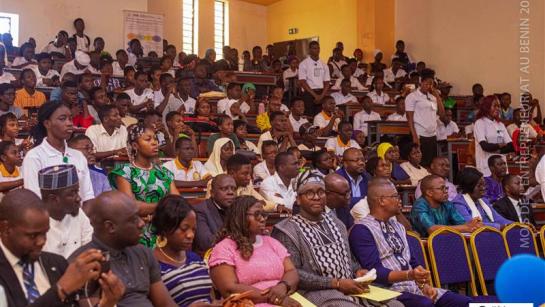
Entrepreneurship Month in Benin (MEB) is a flagship annual event designed to give a major boost to the national private sector and promote local synergies. This report summarizes the main findings and recommendations from the five workshops/panels supported by the IYBA-SEED project as part of MEB 2025.


