


Context
Entrepreneurship support organisations (ESO) play a central role in strengthening entrepreneurial ecosystems. They help coordinate stakeholders, pool resources, support entrepreneurs, and amplify the voice of ecosystems in public policy and funding spaces. As these ecosystems evolve, ESO networks emerge as key levers for structuring support offerings and enhancing collective impact.
In Francophone Africa, many ESO networks - still young or in the process of structuring - seek to consolidate their activities and assert their positioning. However, these networks have few opportunities to learn from more established networks that have already faced similar challenges, particularly in governance, coordination, economic models, and member services.
While more mature networks have developed structured approaches and proven mechanisms, these models are not directly transferable from one context to another. Differences in institutional environments, funding dynamics, and member profiles require careful adaptation rather than replication.
Building Sustainable Networks Together
In this context, peer exchange is a relevant lever for generating insights rooted in local realities by sharing both successes and challenges. This meeting brought together emerging ESO networks in Francophone Africa and more established networks to foster dialogue, mutual learning, and the sharing of concrete experiences. Discussions focused particularly on strengthening governance, coordination mechanisms, and member services, as well as the conditions needed to build sustainable, high-value networks.
Speakers:
- Isabelle Hoyaux, ScaleChanger
- Florian Sora, EBN
- Zeinab Messaoud, Afrilabs
- Moderated by Leva Rouhani, Hwéfa Consulting
Key Themes and Lessons from the Exchange
The discussion highlighted several cross-cutting ideas about the conditions necessary to structure, strengthen, and sustain ESO networks.
Scaling as a Structured, Long-Term Process
Scaling is not something that can be decreed; it is a gradual process need clear alignment between vision, mission, and ambition, followed by strategic diagnosis, rigorous planning, and resource mobilization. This process is iterative, with phases of testing, learning, and adjustment.
The Importance of a Concrete Value Proposition for Members
Sustainable networks are those that offer tangible value to their members, access to funding, peer learning, visibility, and strategic connections. Mere membership in a network is not enough; value must be demonstrated quickly and continuously.
The Central Role of Trust and Community
Beyond formal structures, high-performing networks are built on trust, active listening to members, and regular interaction mechanisms. Community is built over time through concrete exchanges and a shared sense of belonging.
The Need to Structure Networks as Infrastructure
Networks that successfully scale evolve into structuring platforms (programs, tools, databases, shared services) rather than remaining spaces for occasional exchanges. This structuring creates multiple entry points and strengthens member engagement.
Quality, Credibility, and Governance as Levers for Sustainability
Quality standards (e.g., certification), formalized and transparent governance, and institutional credibility are essential for building trust with partners and donors. Governance becomes a strategic investment as the network grows.
Diversification of Economic Models
The sustainability of networks depends on diversifying revenue sources (membership fees, services, projects, public and private funding). Relying on a single funding source limits the capacity for action and independence.
More Integrated and Action-Oriented Support Approaches
Effective support programs combine multiple services (mentoring, training) and prioritize practical, tailored approaches that meet the needs and maturity levels of entrepreneurs. Overly theoretical or standardized approaches show their limitations.
Implications for Emerging Networks
- Clarify a Unifying Vision from the Start
Emerging networks must define a clear, ambitious, and mobilizing mission capable of fostering a sense of belonging and guiding strategic choices. - Prioritize Immediate Value Creation for Members
It is essential to quickly demonstrate the network’s usefulness through concrete services (opportunities, connections, learning) to strengthen engagement and retention. - Invest in Community, Not Just Structure
Relational dynamics (exchanges, trust, listening) are as important as tools or programs. A strong network is first an active community. - Progressively Structure Services and Platforms
Rather than multiplying events, emerging networks would benefit from developing sustainable tools and services that reinforce their role as infrastructure within the ecosystem. - Implement Governance Mechanisms Adapted to Growth
Anticipating governance challenges (representativeness, transparency, membership criteria) is key to maintaining credibility and managing growth. - Adapt Offerings to the Diversity of Members
Needs vary depending on the maturity level of structures. Networks must offer differentiated services and avoid uniform approaches. - Consider Financial Sustainability from the Early Phases
Diversifying revenue sources and developing value-added services reduce dependence on external funding and strengthen strategic autonomy.



THE LIVING TAPESTRY: a new animated short film celebrates the Women shaping Africa's entrepreneurial future
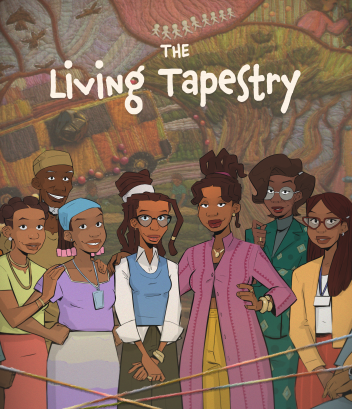 Triggerfish Animation Studio, Goon Valley Animation Studio, and the European Union’s Team Europe Initiative – Investing in Young Businesses in Africa #TEIIYBA, are proud to announce the forthcoming release of The Living Tapestry, a pan-African animated short film with a social mission. The f...
KENYA - Biashara Pawa Awards celebrate women and youth entrepreneurs transforming underrepresented sectors
 Celebrate entrepreneurial excellence, community impact, innovation, and leadership After months of dialogue, mentorship, networking, and learning, the Biashara Pawa Awards provided an opportunity to recognise the women and youth entrepreneurs who are redefining what is possible in sectors wher...
Demo Days 2026: from capacity building to market readiness for green industries in Africa
 From strengthening ESOs to preparing African green businesses for regional expansion Across Africa, green startups and SMEs are developing innovative solutions in renewable energy, sustainable agriculture, waste management, water, clean technologies and other emerging green sectors.
Benin-Togo Exchange Visit: Strengthening Regional Entrepreneurship Cooperation
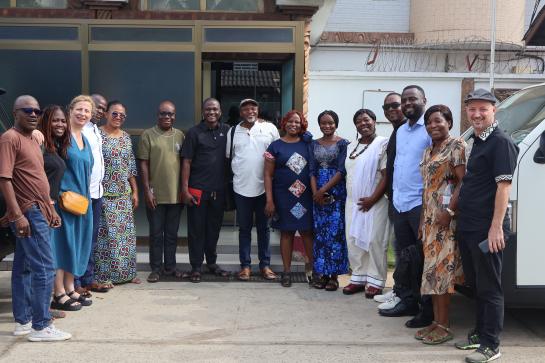 From May 18 to 22, 2026, the IYBA-SEED Benin and IYBA-SEED Togo teams invited a delegation of actors from Benin's entrepreneurial ecosystem to take part in an exchange visit between Kara and Lomé, Togo.


